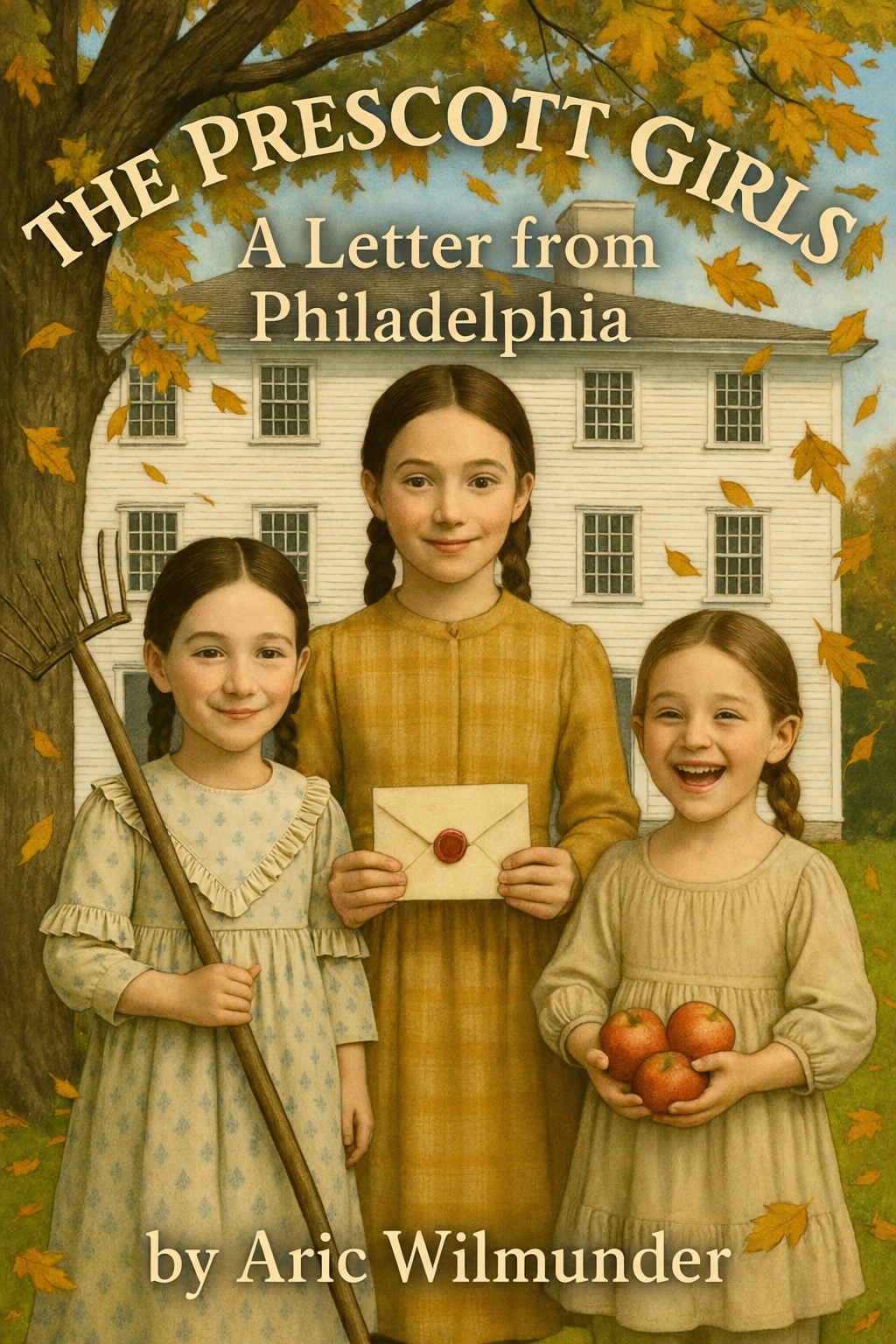
The Prescott Girls
A historically based middle‑grade novel inspired by real needlework samplers in 1830s Maine.
Beckie, Louisa, and Sallie Prescott live upstairs in the old courthouse in rural Maine, where winters are long, sugar is sweet, and silence is often mistaken for peace. But in 1834, as whispers of abolition reached even their small community, the girls began to notice contradictions between the values they were taught and the goods on their family’s table.
When a letter from Philadelphia sparks a conversation, the sisters begin to ask hard questions — about sugar, slavery, and what it means to speak truth aloud. Their stitches, once meant for practice, become threads of conscience. And in the stillness of their home, even the youngest voices begin to carry weight.
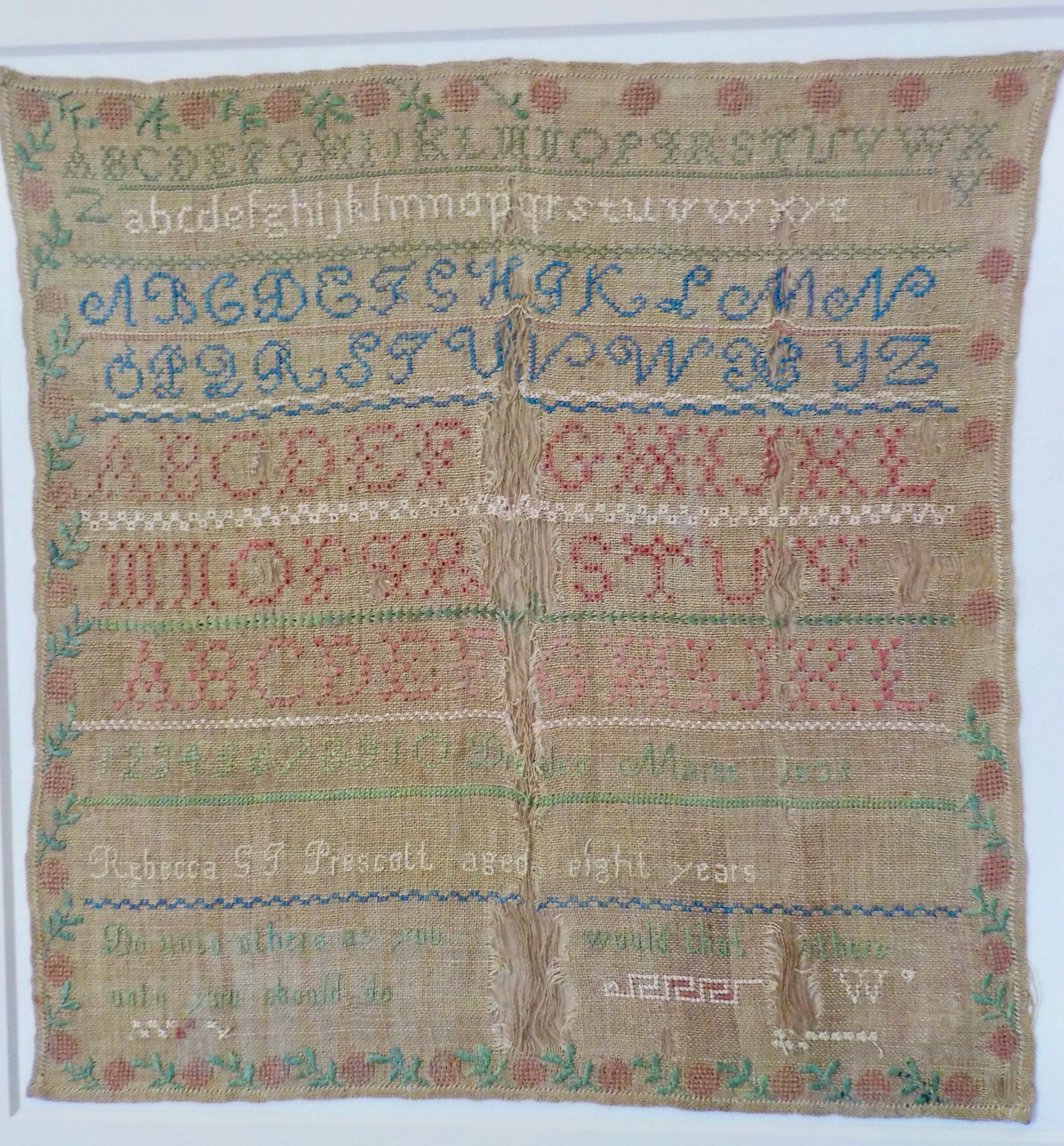
Inspired by real samplers and real girls, The Prescott Girls is a story of quiet resistance, stitched with care, rooted in history, and told through the eyes of three sisters who chose to listen, to speak, and to act.
About this project
The Prescott Girls is inspired by real 19th‑century needlework samplers and the lives of the girls who made them. The goal is a story that is warm, honest, and historically grounded—built from primary sources where possible, and imaginative where history leaves room.
Three sisters. One letter. A quiet stand.
In 1834, after the loss of their father and the sale of their home, Beckie, Louisa, and Sallie Prescott travel by wagon to the old Pownalborough Courthouse in Dresden, Maine, where their family must begin again. The old courtroom becomes their bedroom, the wide pine floors echo with new footsteps, and the river beyond the hill carries news from a wider world.
When a letter arrives from their friend Hannah in Philadelphia, it brings more than friendly words. It carries a challenge: to think about how sugar is made by enslaved people far from their quiet Maine home, and to decide whether even young girls can choose differently. Guided by their stitching, their lessons, and the people who pass through their home, the sisters discover that courage may be quiet, but it is never small.
Drawn from real nineteenth-century samplers, letters, and the lives of the girls who once lived in the courthouse, The Prescott Girls: A Letter from Philadelphia is a story of conscience, family, and the power of young voices to leave their mark on history—one stitch, one letter, and one brave word at a time.