The Book
Synopsis
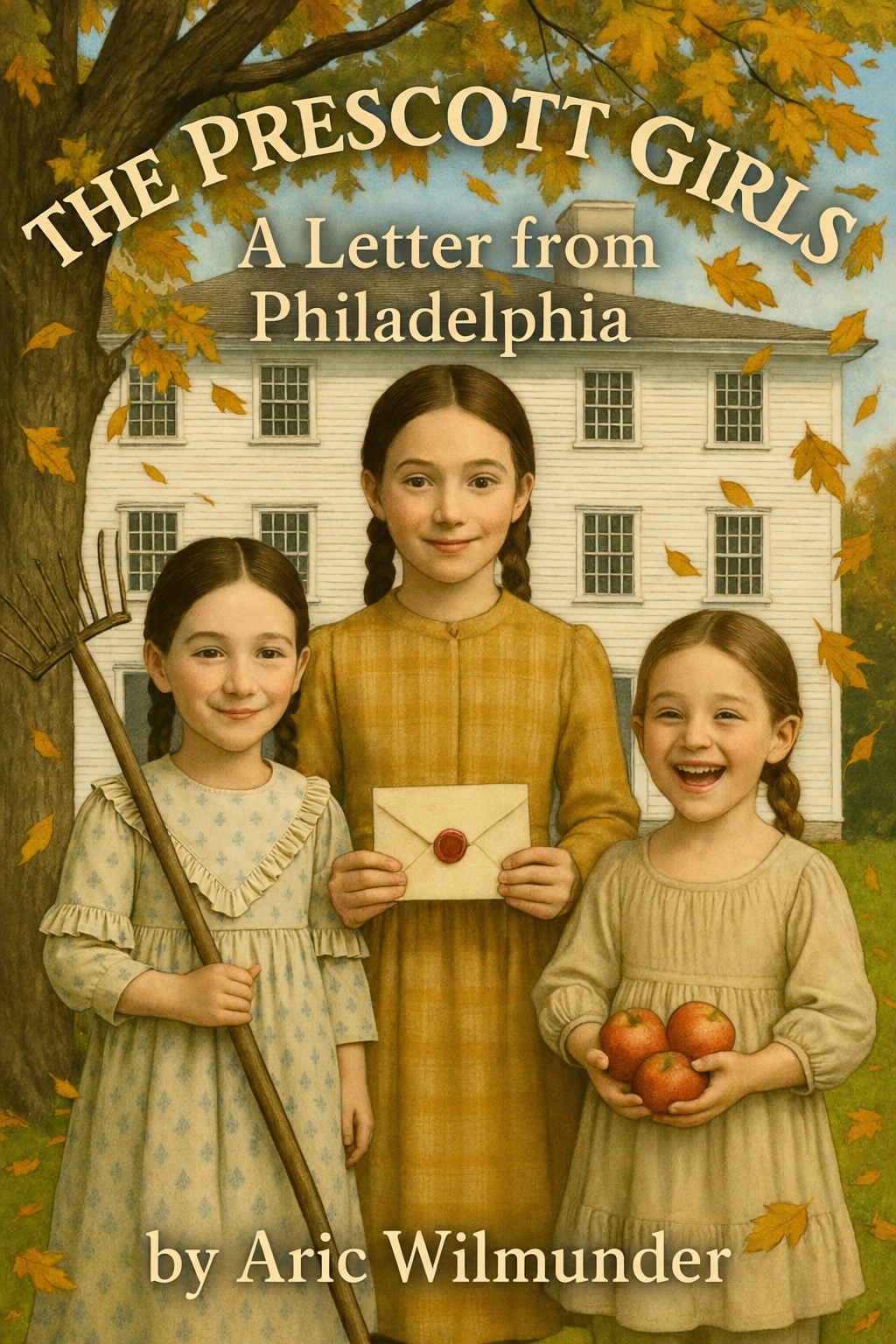
In 1834, three sisters arrive at the old courthouse in Dresden, Maine after the death of their father forces their family to start over. Though once the center of local law, the former Pownalborough Court House has long since become a family home, where their uncles live and work and where the wide courtroom now holds everyday life instead of trials. Beckie seeks justice, Louisa carries quiet grief, and little Sallie finds wonder in the natural world around them. When a letter from Philadelphia reveals that the sugar they use may be tied to slavery, the girls face a question far bigger than themselves: what does it mean to do the right thing when the answer may change the way everyone around them lives?
Details
Format Paperback • Hardcover
Length 252 pages
Publisher A Well‑Regulated Press
Historical notes
Beckie, Louisa, and Sallie Prescott were real sisters who lived with their mother in the upstairs rooms of the old Pownalborough Court House in Dresden, Maine. The building, once a courthouse, tavern and post office, became their home in the 1830s. Many of the details in the book come from their documented lives and surviving objects, including the samplers stitched by Beckie and Louisa, and their mother. A third unfinished sampler on display may have been Sallie’s. Other objects that appear in the story, such as the chalk sketches, the snow sled, the loom, and the Noah’s Ark toy, reflect objects that would have been part of their daily world.
Uncle Thomas did run the Post Office, and Uncle William maintained the property. Hannah is inspired by Ann Canby, a Quaker, whose sampler was found with those made by the Prescott family.
While there is no evidence that the real Prescott girls were involved in organized abolitionist activity, the ideas discussed in the story are drawn from the historical setting in which they lived. The girls were Congregational with ties to the Quaker community. Quakers in particular played a leading role in boycotting goods produced by enslaved labor, including sugar, cotton, rum, and tobacco. The pamphlet Address to the People of the United States on the Subject of Slavery is a real document from that era. Young girls speaking publicly about these ideas would have been unusual, though not impossible.
Their mother’s obituary, written in 1897 when she died at age ninety-nine, records that she was married to Warren Prescott in the old Court House by Reverend Freeman Parker, known locally as the "Blind Preacher of Dresden." It also notes that her ancestors had once kept enslaved people there and that she lived long enough to see slavery abolished thirty-five years before her death. Warren Prescott died in March of 1833 when he fell through the ice on the Kennebec river. Court records list numerous household purchases and outstanding debt. These debts needed to be paid after his death.
What can be documented of the sisters’ later lives show them to have been part of a wider American story. Beckie and Sallie spent many years in Philadelphia, and Beckie later returned to the Court House. Louisa married William Jackson Canby, nephew of Ann Canby and the grandson of Betsy Ross, the woman traditionally credited with sewing the first American flag. Their descendants traveled west to California, where they grew oranges and preserved the samplers together for nearly two centuries.
Readers who would like to learn more about Sallie’s later life can look to Sallie & Captain Sam, which is based on her real diary.
The conversations, thoughts, and daily scenes in this book are imagined, but they are grounded in the historical record. They are offered as a way to bring to life not only what is known to have happened, but what might have been experienced by three young sisters growing up in an unusual home during a time of change.
The Pownalborough Court House still stands today. The samplers and many related objects can be seen there, connecting the present to the lives of the Prescott family.