About The Author
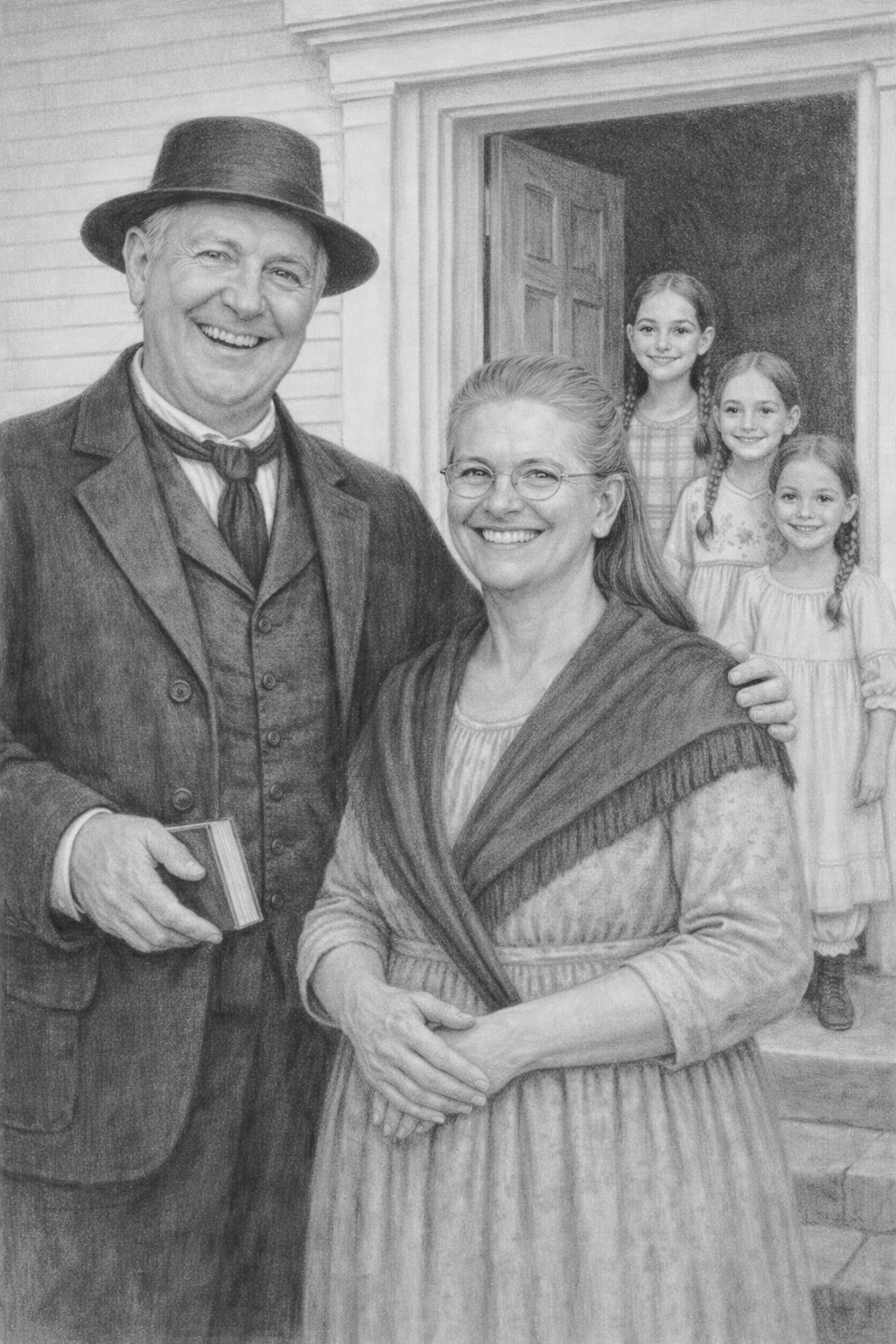
The author and his wife Lori Love stand before the Pownalborough Court House in Dresden, Maine, where the Prescott sisters once lived and where the samplers that inspired this story were stitched nearly two centuries ago. Behind them appear Beckie, Louisa, and Sallie Prescott, imagined as they might have looked in the 1830s.
Bio
Aric Wilmunder is a writer, technologist, and historical researcher whose work bridges storytelling, history, and craftsmanship. His current project is The Prescott Girls: A Letter from Philadelphia, a middle-grade historical novel inspired by early nineteenth-century needlework samplers and the lives of three real sisters connected to the historic Pownalborough Courthouse in Dresden, Maine.
Before turning to historical writing, Mr. Wilmunder spent decades in the technology and interactive entertainment industries, including work at Lucasfilm Games (later LucasArts). His background in software engineering and interactive media continues to influence his research-driven approach to storytelling.
Mr. Wilmunder works closely with historians, museums, and textile experts. Along with his wife Lori Love, an accomplished needleworker whose work has received numerous honors including multiple Best of Show awards and the California Golden Bear at the California State Fair, he helped document and return historically significant samplers connected to the Betsy Ross family. Their research was published in PieceWork magazine in the article Six Stitches Through Time.
Press kit
Events & Press Downloadable materials and quick facts.
Why the details matter
The story behind this book began with the unexpected discovery of several early nineteenth-century needlework samplers at a California auction during the pandemic. At first they appeared to be typical schoolgirl samplers, but closer examination revealed the names of the Prescott family of Dresden, Maine. Further research led to the identification of the place where the girls had lived and where the samplers were most likely stitched, the old Pownalborough Court House, a historic building that still stands overlooking the Kennebec River.
As the research unfolded, the connection between the samplers and the Court House became increasingly clear. The building had once served as a courthouse, tavern, and post office before becoming the Prescott family’s home in the 1830s. Recognizing that the samplers were part of the history of that place, a decision was made that they should ultimately return to the community where they had been made. After nearly two centuries and a long journey across the country, the samplers were returned to the Pownalborough Court House, where they now help tell the story of the Prescott family and their unusual home.
The historical details in this book are based on careful research into the Prescott family, their genealogy, and the surviving records connected to their lives. Wherever possible, names, relationships, and documented events have been verified through archival and genealogical sources. The conversations, personalities, and many daily scenes are imagined, but they are grounded in the historical setting and offered as a way to bring to life what growing up in the old Court House might have been like for three young sisters in the 1830s.